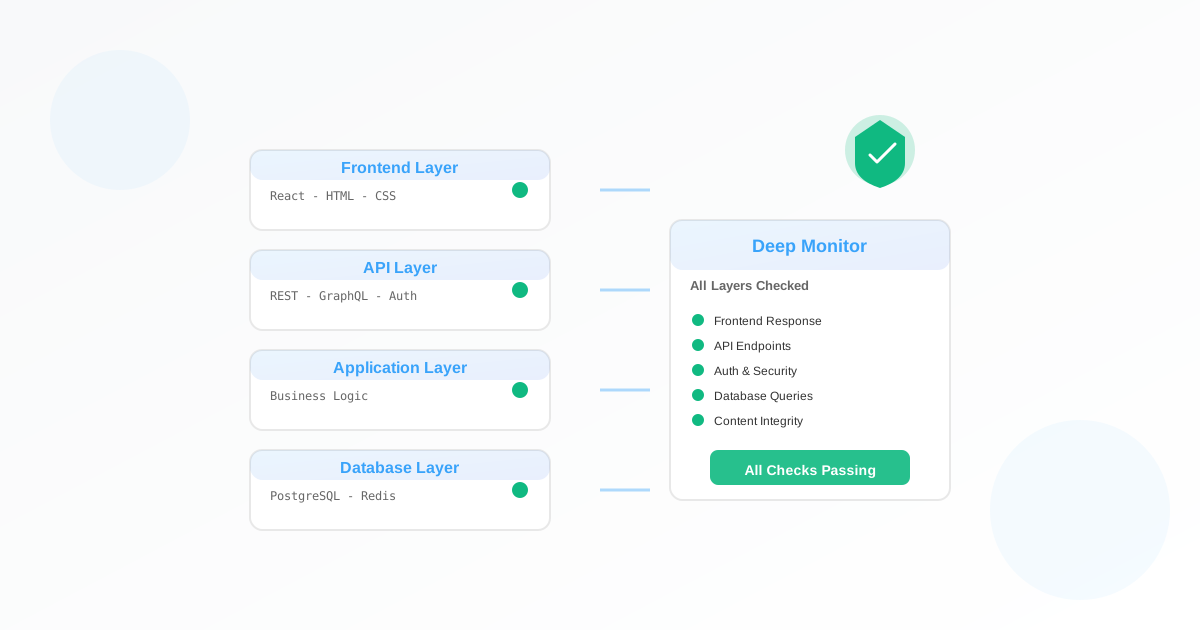
Monitor every layer of your application
Web site monitoring typically validates the uptime of the website, but ideally you should do much more. We recommend that you monitor all of the following:
- Website uptime: Is the website up and responding? (obvious, but essential)
- Security checks: Are secured sections of your site unavailable to the public?
- Data privacy: Is confidential information on public sites not leaking?
- Service availability: Are all different sections or services in your site working properly? For example, one section might rely on the database, another might rely on an application server, and another might rely on a static HTML page. You should monitor them all. Partial outages are still outages.
- Content integrity: Has your site been hijacked or defaced? This is tricky to detect, but you can monitor your site for changes.
Why deep monitoring matters
Surface-level monitoring only tells you if your homepage is reachable. But what if:
- Your login system is broken, but the homepage works fine
- Your payment processing is down, but other pages load normally
- Your API endpoints are returning errors, but the static content displays
- Your database connections are failing intermittently
Deep monitoring catches these issues before your customers do. You should deeply monitor your website and get an alert as soon as anything goes wrong.
Get started with deep web monitoring
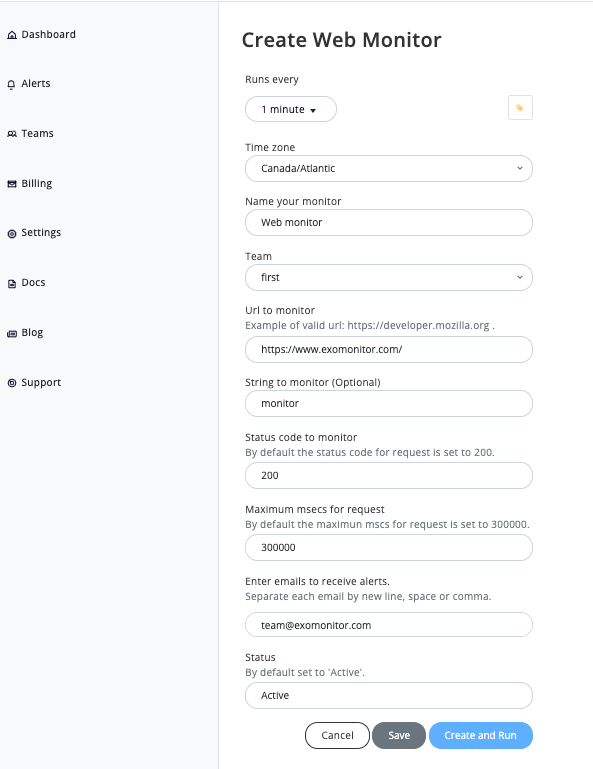
Start monitoring your website with Exomonitor today by filling a similar form to the one below.
Ready to start monitoring?
Get instant alerts when issues occur, so you can quickly troubleshoot and fix problems.
Flexible monitoring:
- Select the frequency that works for your needs
- Stop or pause the monitor at any time
- Pricing updates automatically based on frequency
- Set up monitors before entering payment details